This post is also available in:
When you come across a game crafted with heart and soul, have you ever found yourself wondering:
“What on earth drives the creator this far?”
In this interview series, “Visiting Your Origins,” we gently step into the foundational core of game creators.
This one’s going to hit especially hard if you’re:
- A developer wanting to reconnect with your creative core
- Someone unsure about exhibiting at events
- A player curious about what goes on behind the scenes
This time, I had the chance to speak with TUKUCHAU-OJISAN, as part of the interview segment for my pre-release coverage project, “Pre-Release Spotlight”—a project aimed at creating an atmosphere where people feel like:
“Hey… maybe it’s okay to really talk about this game.”
Much appreciated!!
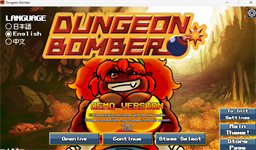
I’ve also written a companion article introducing his upcoming title Dungeon Bomber (Steam store link), so definitely check that out too (link).
- Introducing TUKUCHAU-OJISAN
- Digging Into the Making of Dungeon Bomber
- Lowering the Barrier to Entry
- Behind the Homemade PV (With Singing!)
- The Exhibition They Organized
- Three Unforgettable Games
- Self-Management Through Daily Logs
- I Used to Make Games Out of Resentment
- So What Drives You Now?
- Message to Readers
- Closing Thoughts
Introducing TUKUCHAU-OJISAN
Today’s Guest: TUKUCHAU-OJISAN

Notable Works:
Usagi Puzzle / Akazuno Hako / Ageage-kun series / Evolution Theory of Tic-Tac-Toe, etc.
Browser Game Site (playable on mobile & PC)
X (Twitter): @hothukurou
—Alright then, could you introduce yourself?

I go by TUKUCHAU-OJISAN. I publish browser games on my personal site and also release games on Steam.
Some of my past works that gained attention include the browser games “Not-So-Scary Horror Game Usagi Puzzle,” “Evolution Theory of Tic-Tac-Toe,” and “Custom-Bound Village Strip Poker.”
I started making Flash games back in 2010 when I was a sophomore in college. After that, I got a job unrelated to games, then moved to a startup, and continued releasing one game per month alongside that work.
Currently, I’m freelancing to support myself while focusing on developing games that can be properly sold on Steam.
—Thank you! Before we dive in, let me throw a quick warm-up question your way!
What do you usually drink while working on game development?

This. OK supermarket’s the people’s ally.
—OK! There used to be one near where I lived—I relied on it a lot too!
Digging Into the Making of Dungeon Bomber
It All Started with Reactions at Exhibitions
—If you had to sum up Dungeon Bomber in one sentence, what kind of game is it?

It’s a puzzle game where chaining explosions and growing your abilities is fun.
If I had to use more technical terms, it’s a bomb deck-building roguelike puzzle game.
—You mentioned that one reason for making this system more accessible than your previous title Dungeon Destroyer was that “it took effort to understand before it became fun.”
Did you ever hesitate, thinking, “Maybe I should stick with the more complex style anyway?”

When I was making Dungeon Destroyer, I had no hesitation—I wanted to create something new and interesting, even if the rules were complicated.
But at exhibitions, when people actually played it, I realized that complex rules meant spending a lot of time just explaining how to play.

That made me decide:
“Next time, I’ll make something easier to understand.”
So instead of combining difficult elements like roguelike and path-building puzzles, I built Dungeon Bomber around the more intuitive and satisfying concepts of explosions and chains.
Resource management is technically still there, but it’s designed so that players naturally understand it just by playing.
Lowering the Barrier to Entry
—When I was writing the introduction article, I actually debated whether to highlight the deck-building aspects—since there’s hand management and pseudo deck-thinning through fusion…
Why didn’t you emphasize deck-building more in your PR?

To make it easier to understand and lower the barrier.
Surprisingly, the term “deck-building” didn’t land well at exhibitions.
That said, when selling on Steam, it does work—so I subtly include it in the description to catch people searching for it.
—I was honestly surprised that “deck-building” didn’t land at exhibitions.
I had this assumption that people there would be super hardcore, high-level gamers…!
Behind the Homemade PV (With Singing!)
How the PV Came to Be
—Dungeon Bomber has a self-made PV, with music you hummed and vocals by your wife…!
How did that even come about?

A big influence was visiting the Masahiko Sato Exhibition, known for things like PythagoraSwitch and Don Tacos commercials.
One of the ideas presented there was:
“CM songs are great because they stick in people’s ears.”
That inspired me to create a PV song myself.
What I Learned from Making the PV
There were two main takeaways:
- CM songs work well in passive media like TV, but on platforms like Steam—where users actively search—they’re less effective. In the worst case, they can come across as inside jokes.
- PVs should focus on helping players understand the game. So it’s better to show actual gameplay and clearly communicate what you can do.
The Condition for Adding Vocals
—What was your wife’s reaction when you asked her to “add vocals” to that song?

She said, “Sure—if you treat me to Bronco Billy. (Japanese steak restaurant)”
—That’s… a much more powerful response than expected. lol
The Exhibition They Organized
A Space Where Players Feel Close
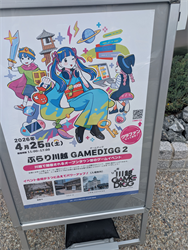
—You also hosted a game exhibition called “TUKUCHAU Guys Exhibition” with fellow developers. What kinds of conversations did you have with visitors there?
We had incredibly close interactions—talking in depth about impressions and even listening to people’s concerns.
It felt like a very intimate space.
At that level of closeness, even something like a self-made PV—which might otherwise feel like an inside joke—was very well received.
A lot of visitors were fellow developers asking things like,
“I want to exhibit too—where do I even start?”
I’ve given advice like,
“Using a fabric poster for A1 makes it much easier to carry,” or
“It’s useful to track play counts so you can actually measure effectiveness.”Later on, when I met them again at a different developer event, they thanked me and said,
“I’ll be exhibiting at Tokyo Game Dungeon 12!”So I was glad to hear it ended up being helpful.
—What kind of audience did you get?
Mostly people who were already connected via SNS or had played past works.
Some came from event listings or articles on sites like 4Gamer.
But we didn’t really get random passersby from Shibuya.
It was mostly people who already liked games.
Next time, I’d like to make it more accessible for casual visitors too.
—That level of closeness sounds amazing. From a player’s perspective, creators feel like they exist way up in the clouds…
Three Unforgettable Games
—Tell me three unforgettable games—and why!

Final Fantasy X, Shiren the Wanderer, and Dominion.
Final Fantasy X

It was an RPG that was fun mechanically, but also deeply moving because of its story. I played it in sixth grade, and I still remember being blown away by its dense story and world.
Auron—the older figure who guided the protagonist, Tidus—left a strong impression on me. I looked it up just now… he’s 35.
Somewhere along the way, I ended up the same age as him.
…Yeah, I kind of want to be Auron now and swing the Masamune around.
Shiren the Wanderer
This is where I first experienced the joy of roguelikes. I started with Shiren GB2, and I loved the wild balance—like leveling up enemies to spawn stronger ones deep in the dungeon, which then gave huge EXP if defeated.
After that, I poured an unreasonable amount of time into Shiren the Wanderer DS, tackling what anyone who loves roguelikes has probably heard of at least once: “Fei’s Final Problem.”
Even when I managed to forge the strongest possible gear along the way, it could all vanish in an instant—
like getting my weapon knocked out of my hands by a Cell Armor right as I encountered it, only to watch it sink into the water and disappear…Or getting pelted endlessly with Sleep Grass and Poison Grass by a trio of Sleepy Radishes, never to wake up again…
Or being grabbed by a Tiger Tosser and thrown straight into a Monster House, where I was promptly beaten to death…
Yeah—those moments of defeat are the ones that still stick with me, even now.
Dominion
The origin of deck-building games.
I got hooked on it after playing it in my university club room back in 2010.
That was also around the time I first discovered how fun board games could be. These days, I’ve fully grown into someone who loves heavier titles—games like Agricola or Terra Mystica that can easily take two hours or more per play.
Building your own deck was just too fun. That led me to release “Mysterious Dungeon of Cards” in 2012, combining RPGs with deck-building. I think it might have been one of the earliest examples of that combination.
—Hearing “Shiren” and “Dominion,” I couldn’t help but think:
“Ah—this connects directly to Dungeon Destroyer and Dungeon Bomber!”
On the flip side, I had this image of you as someone who builds from gameplay first, so FF10 being story-driven was honestly surprising.
Self-Management Through Daily Logs
—You mentioned using daily logs to manage your work. What do you actually write in them?

I write down what I accomplished that day and events I participated in.
Just writing a log boosts your self-esteem like crazy—I highly recommend it.
Especially when you’re working solo, it’s really important.
—Daily logs for self-esteem boosts… I might quietly start copying that.
I Used to Make Games Out of Resentment
—In a previous interview with Denfaminico Gamer, you talked about channeling resentment into your games.
Is that why your browser games often lean toward horror or psychological themes?
At least until around 2018—when I was working at a big company—I definitely made games out of resentment.
After moving to a startup, that resentment disappeared, but I kept making games anyway.
As my site traffic steadily grew, that became a stable source of motivation.
So What Drives You Now?
Feedback Is the Fuel
—Now that the resentment is gone, what motivates you?

Of course, hearing
“That was fun! I’ll definitely buy it when it releases!”
is motivating.But what really drives me is feedback that points to possible improvements.
“What Players Actually Needed”

That motivation tends to be delayed.
When I go home and reflect on feedback, I often suddenly realize:
“Oh—this would make it much clearer.”
“This could make it more fun.”After gathering lots of feedback, the moment I arrive at one clear solution that ties it all together—that’s when my motivation peaks.

It’s like that famous concept in software:
“What the customer actually needed.”
Individual complaints are just hints.
If you take them at face value, you end up with local optimizations.
But when you synthesize them and make a holistic improvement, that’s when it really clicks.
Finding Solutions from Feedback

For example, I got feedback in an exhibition saying:
“Dragging controls are difficult.”
Looking into it, one issue was that players—being nearsighted—leaned close to their laptops, using the mouse in a cramped space in front of them.
Simply moving the mouse to the side of the laptop solved the problem.

I also increased text size to encourage better posture, making mouse dragging easier.
There was even a case where:
“The cloth under the mouse was slipping and making input difficult.”
That was solved by removing the tablecloth.

These kinds of issues only become visible through close observation.
Even things like
“The tutorial didn’t land”
become clear through playtesting.I take notes constantly and keep improving.
And when those improvements finally land—that’s another big motivation boost.
—So it’s like that “customer wanted a swing, but communication got twisted” kind of situation, right?
Not taking feedback at face value, but synthesizing everything into one solution?

Exactly.
That moment when multiple pieces of feedback converge into one clear improvement—that’s the best feeling.
Message to Readers
—Finally, any message for the readers?
If you’re interested in freelance indie game development, definitely follow TUKUCHAU-OJISAN on X!
I share useful info like the ridiculously cheap coworking spaces I practically live out of, announcements for “mokumoku” work sessions, and game exhibition events.
You can also track my monthly browser game releases and progress on my Steam title Dungeon Bomber!
https://x.com/hothukurou
—That’s all the questions! Thank you so much for your time!!
Closing Thoughts
So—what did you think?
Did you get a small glimpse of TUKUCHAU-OJISAN’s creative origins—
what he’s really searching for when he makes games?
Or maybe—
what you are looking for in games, yourself?
…Every once in a while, it might not be such a bad idea
to lean into your own creative origins.
Huge thanks to him for kindly accepting an interview request from someone like me—basically a nobody off the street!!
I’ve also written a separate article introducing his new game Dungeon Bomber (link), so be sure to check that out as well.
This series, “Visiting Your Origins,” will continue featuring indie game creators.
(If you’re a developer thinking, “Hey, maybe I’d be interested,” feel free to reach out via the contact form!)
In the previous “Visiting Your Origins,” I had the chance to sit down with MST, the creator of the simulation game STRANGER SAGA.
If you’re interested in a creative process that builds things up by refining a core concept step by step, it’s absolutely worth checking out.
– Visiting Your Origins – #1 Interview to MST-san – Kaburanai Games
Enjoy your gaming life!!
And thanks for reading all the way to the end!
Over on X, I post article updates and yell about whatever game I’m currently playing or creating.
It’s about 1.3 times louder than the blog.
(According to our highly scientific internal estimates.)
To game developers:
This experimental series, Pre-Release Spotlight, focuses on digging into why a game is fun based on actual demo / early access play.
The goal is to create a space where people feel:
“Yeah… this is a game worth talking about.”
If you’re interested, feel free to reach out via the form below.