This post is also available in:
And with that, we’re kicking off a brand-new series—“Pre-Release Spotlight”!!
This project zeroes in on games before release, diving deep into the play experience, design intent, and the creative core behind them—no holding back.
Our very first featured title is Dungeon Bomber, and the developer stepping into the spotlight is TUKUCHAU-OJISAN.
Witness it.
- Today’s Guest: TUKUCHAU-OJISAN
- What is Dungeon Bomber?
- A New Genre—Yet Instantly Understandable
- Even in a New Genre, the “Flow of Play” Is Exceptionally Clear
- Flow Structure of Dungeon Destroyer
- Flow Structure of Dungeon Bomber
- The System Secretly Rewards “Feeling Good”
- Choking on Barley Tea When the Main Theme Hits at the Worst Possible Timing
- The Evolving Player Guidance
- Who Should Play This?
- Final Thoughts
Today’s Guest: TUKUCHAU-OJISAN

Notable Works:
Usagi Puzzle / Akazuno Hako / Ageage-kun series / Evolution Theory of Tic-Tac-Toe, and more
Browser games playable on both mobile and PC
This project aims to create an atmosphere where people can go:
“Wait… I can actually go all in and talk about this game as much as I want?! That’s amazing!!”
In other words, we’re lowering the barrier to talking about indie games.
And hey—if you’re thinking,
“I don’t really have anything to say…”
No worries.
If you play the game and read the interview (link here), you’ve already joined the conversation—whether you say a word or not.
You and I? We’re sharing the same arena of discourse.
Which makes us comrades-in-arms.
Sound good, brother? Sister?
…By the way, during our initial exchange, I asked the following deeply foolish question:
“So, when writing your name… is it ‘TUKUCHAU-OJISAN? Or ‘TUKUCHAU-OJISAN-san’?”
To which I received this wonderfully sharp reply:
“One ‘-san’ is preferable, but I can follow whatever rule you decide.”
Smooth. Clean. Intelligent.
And so, from here on out, I’ll simply refer to him as TUKUCHAU-OJISAN, no honorific attached.
What is Dungeon Bomber?
Genre: Chain-Explosion Roguelite
Developer / Publisher: TUKUCHAU-OJISAN
Country: Japan
Store Page: Steam
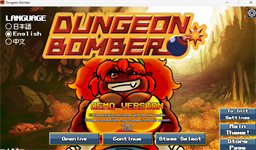
At its core, it’s a stage-based puzzle game.
You place bombs.
You detonate them.
Enemies, blocks, coins—everything gets wiped out in one glorious sweep as you dig deeper into the dungeon.
Coins from explosions can be used to acquire and fuse new bombs, and blowing up enough enemies grants special abilities.
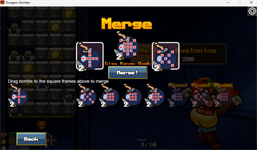
You explode → power up → explode harder.
That’s the loop.
Chain explosions increase damage, meaning a well-executed combo can erase entire screens while dealing massive damage.
The sheer sense of impact is incredible.
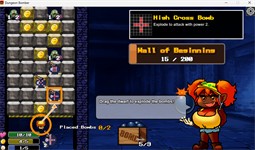
Now, I’ll be honest—I’m not exactly great at puzzle games.
But even just focusing on
“make bombs bigger and stronger”
was enough to trigger unexpected, multi-layered chain reactions, and before I knew it, I had cleared the demo while drunk on pure explosive satisfaction.
A New Genre—Yet Instantly Understandable
When discussing the game beforehand, TUKUCHAU-OJISAN mentioned:
“I wanted to make something more intuitive, learning from Dungeon Destroyer.”
And after playing through the demo, I completely get it.
This game is designed so that you can describe it in one sentence:
“Chain explosions, build stronger bombs, and enjoy chaining even bigger explosions.”
Simple, right?
And that simplicity?
It creates exceptional accessibility.
Even in a New Genre, the “Flow of Play” Is Exceptionally Clear
When kicking off this project, I had a strategy discussion with TUKUCHAU-OJISAN, and he told me:
“Taking lessons from Dungeon Destroyer, I aimed to make this one easier to understand.”
So I went ahead and played through the demo.
And what I felt was this:
“This is designed so you can explain what the game does in a single sentence.”
At first glance, what you do in this game sounds simple:
“Chain explosions, build stronger bombs and builds, and enjoy chaining even bigger explosions.”
That simplicity is exactly what creates its remarkable accessibility.
…But just saying that probably isn’t enough to fully convince you.
So let’s take a look—using a diagram—and compare it with the previous title, Dungeon Destroyer.
Flow Structure of Dungeon Destroyer
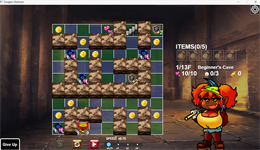
When I played Dungeon Destroyer, I felt the gameplay flow looked something like this:
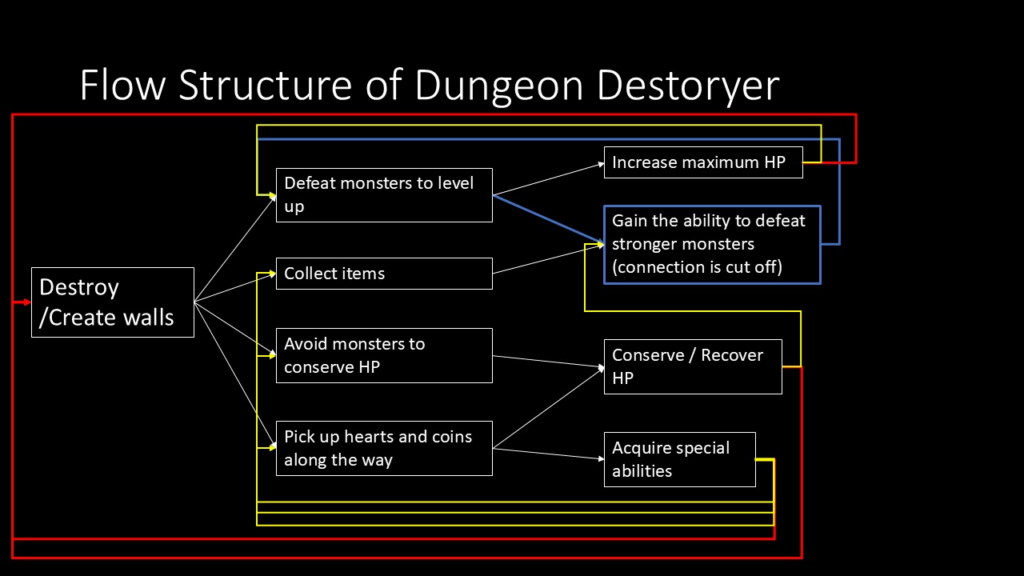
Layer 1: Core Actions
- Destroy and create walls
↓ leads to
Layer 2: In-Game Objectives
- Defeat monsters to level up
- Collect items
- Avoid enemies to preserve HP
- Pick up hearts and coins along the way
↓ which results in
Layer 3: Rewards
- Increased maximum HP
- Ability to defeat stronger monsters
- HP conservation and recovery
- Acquisition of special abilities
And then, those rewards feed back into Layers 1 and 2.
What Felt Off About This Structure
When I mapped this out, a few things stood out:
- The path from “being able to defeat stronger monsters” (Layer 3) connects almost exclusively to
“defeat monsters to level up” (Layer 2), forming a near self-contained loop between just those two elements. - Because of that, it feels somewhat disconnected from the rest of the system.
- Unlike other rewards, “being able to defeat stronger monsters” doesn’t clearly feed back into the core actions (Layer 1), making it harder to see how it ties into the core of the game.
- Most Layer 3 rewards connect both back to Layer 2 (objectives) and Layer 1 (core actions),
but this one mainly loops within Layer 2. - Additionally, “HP conservation and recovery” is the only element that doesn’t directly connect back to Layer 2 objectives, leaving it somewhat isolated.
At a glance, you might think:
“That sounds kind of complicated.”
And to be fair—when you actually play it, this complexity is what creates the depth of resource management and that addictive, “pray for a good draw” feeling.
But at the same time, I think you can agree:
It’s a bit harder to explain in one sentence what kind of game it is.
As TUKUCHAU-OJISAN himself put it during the interview:
“Dungeon Destroyer combines roguelike elements with path-building puzzles, so the explanation ends up doubling in size.”
Flow Structure of Dungeon Bomber
Now, let’s map out Dungeon Bomber in the same way.
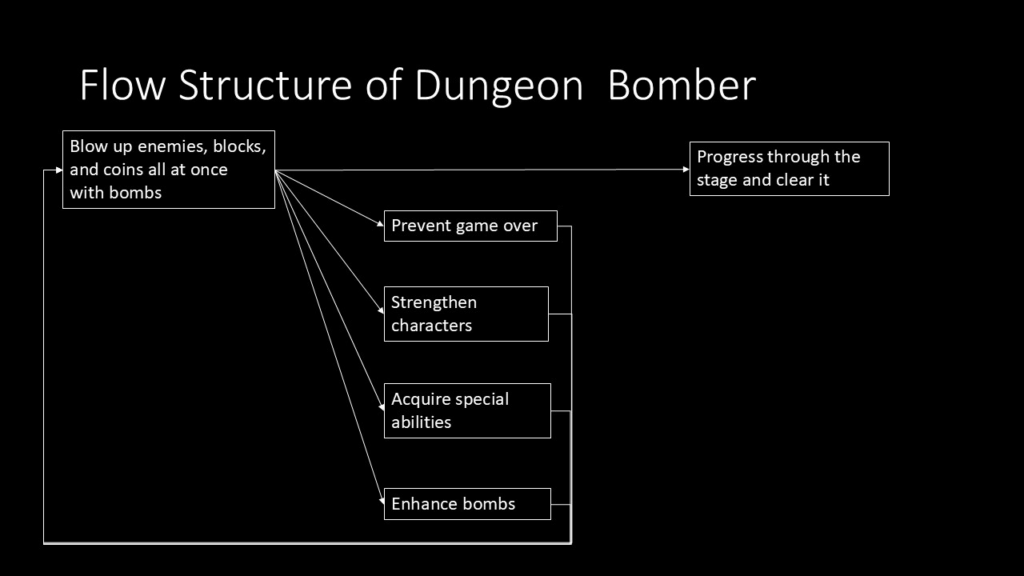
Layer 1: Core Action
- Blow up enemies, blocks, and coins all at once with bombs
↓ directly connects to
Layer 3: Objective / Outcome
- Progress through the stage and clear it
Meanwhile:
Layer 2: Means + Rewards (Integrated Layer)
- Acquiring new bombs
- Enhancing builds
- Gaining abilities
These function both as methods and rewards, and feed immediately back into Layer 1.
So, What Does This Mean?
Pretty clear, right?
Compared to the previous game, Dungeon Bomber has:
A dramatically simplified and easy-to-understand gameplay flow.
The more you explode in a satisfying way,
the more rewards you get.
And the more rewards you get,
the more satisfying your explosions become.
The Result of This Structure
So what happens when you actually play under this system?
You keep exploding.
You keep powering up.
You aim for even bigger explosions.
And the more you lean into that—
the closer you get to clearing the game.
To put it more bluntly:
This game is designed so that “exploding more satisfyingly” is the win condition itself.
The System Secretly Rewards “Feeling Good”
Here’s where it gets interesting.
The more satisfying your explosions are, the more rewards you get.
And the more rewards you get…
the more satisfying your explosions become.
Which leads to this realization:
In this game, “feeling good while exploding” IS the win condition.
Let me say that again.
This isn’t about optimal play.
This is about maximum pleasure output.
You don’t win because you’re smart.
You win because you blew everything up in the most glorious way possible.
Choking on Barley Tea When the Main Theme Hits at the Worst Possible Timing
This game includes a recap of Dungeon Destroyer, along with a story that bridges the gap between the previous title and this one.
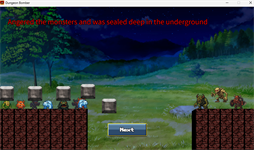
So I’m watching it like:
“Oh, nice—some fan service! Love to see it!”
Completely off guard.
And then—
the main theme kicks in.
Out of nowhere.
Right as I’m drinking barley tea.
Yeah.
It went down the wrong pipe.
I started coughing like an idiot.
The direction here is weirdly polished—it actually builds up a proper pause before dropping the track, so the impact hits way harder than expected.
If I’d swallowed three seconds later, my PC would’ve been baptized in barley tea.
That was close.
Real close.
As for how this main theme came to be…
Apparently, it all traces back to a single line from TUKUCHAU-OJISAN’s wife:
“Sure, I’ll do it… if you treat me to Bronco Billy. (Japanese steak restaurant)”
Yeah.
That’s the origin story.
You can get the full details in the interview (link), so definitely check that out.
The Evolving Player Guidance
At Burari Kawagoe GAME DIGG 2, a game event held in Kawagoe on April 25, 2026, I stopped by to say hello to TUKUCHAU-OJISAN, who was exhibiting there—and had the chance to try the latest version of the game.
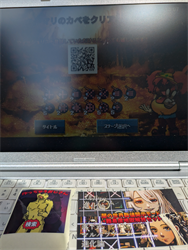
The update brought significant improvements to both the UI and how the game guides player behavior, pushing it further in the direction of being “easy to pick up and play.”
More specifically:
- The dwarf girl’s speech bubble no longer overlaps with the puzzle screen, and the text size has been increased, improving readability.
- The bomb merge system has been reworked: instead of being triggered by coin acquisition, it now activates by blowing up merge furnaces within the dungeon.
These two changes stand out, but the second one in particular fundamentally alters the feel of the game.
It clearly shifts the focus away from puzzle complexity and toward the raw satisfaction of explosions.
When I asked why this change was made, TUKUCHAU-OJISAN explained:
“With the previous system—where players had to choose between using their resources for bomb acquisition or bomb merge—there was a noticeable number of players who never used the merge system at all.”
“So I redesigned it so that players are naturally led into using merge by tying it to destroying furnaces within the dungeon.”
On top of that, after observing players during the demo session, he added:
“Watching people play today, the merge furnaces felt a bit too rare. I’d like to increase their frequency.”
It was clear that he intends to continue refining the game based directly on real-time player feedback gathered at the event.
As I also touched on in the interview article (link), this was yet another moment that showcased his relentless drive to absorb and apply feedback.
Who Should Play This?
If you’ve ever wanted to:
“Drop my ultimate, perfectly imagined, ridiculously overpowered bomb build and watch everything go BOOM—”
This is your game.
It’s a puzzle game, sure.
But more than that, it’s a spectacle of explosive satisfaction, driven by chaotic chains and build synergy.
Especially recommended for players who love:
- Overpowered builds
- Snowballing mechanics
- Turning chaos into dominance
And honestly?
Details don’t matter, brother. Sister.
Show me your ultimate bomb.
Final Thoughts
And that wraps up our introduction to Dungeon Bomber!
We also conducted an interview with TUKUCHAU-OJISAN, so if you’re curious about the mind behind the game, definitely check that out as well (link).
I’ve put together a summary of everything that has changed since the version I covered in my previous article, so be sure to check it out if you’re interested!!
Enjoy your gaming life!!
And thanks for reading all the way to the end!
Over on X, I post article updates and yell about whatever game I’m currently playing.
It’s about 1.3 times louder than the blog.
(According to our highly scientific internal estimates.)
To game developers:
This experimental series, Pre-Release Spotlight, focuses on digging into why a game is fun based on actual demo / early access play.
The goal is to create a space where people feel:
“Yeah… this is a game worth talking about.”
If you’re interested, feel free to reach out via the form below.