This post is also available in:
On May 3, 2026, the indie game exhibition event Tokyo Game Dungeon 12 was held.
This time, I showed up with a business ticket in one hand and a whole lot of nerves in the other—so I figured I’d write up an event report.
Note: All photos used in this article were taken with prior permission from the event organizers, as well as approval from each exhibitor at their respective booths.
- What is Tokyo Game Dungeon, anyway?
- First : secure your drinks
- The line was already massive
- Demo time (and greeting rounds)
- Heroes Saga Zero
- Yumetsukai No Asa to Yoru (Dream Weaver: Morning and Night)
- Slot & Dungeons
- Platonica Space
- Raroteroru Panic
- Garden Hunt
- Oni no Moribito (Guardian of the Oni)
- Aural and the Dragon of Light: Gathering Light
- Deci Twelve
- Closing Thoughts
- For Game Developers
What is Tokyo Game Dungeon, anyway?
It’s an indie game-focused exhibition and demo event held roughly once every three months in Hamamatsucho, Tokyo.
ゲームダンジョン ► 2026年5月3日(日)、東京・浜松町でインディゲーム展示会を開催!
Developers from across Japan showcase their games at booths, and you can jump right in and play them on the spot.
Some booths go beyond demos—selling original merchandise, featuring guest appearances from voice actors, and generally turning the space into something much richer than just a playtest venue.
You can even meet developers you’ve only followed on social media, hear behind-the-scenes stories, and sometimes it starts to feel more like a casual offline meetup.
Demo sessions typically last around 5–15 minutes. Each booth usually has a long table, one or two chairs for players, and a demo PC. Some booths are decked out with handmade goods, tapestries, and eye-catching displays.
Admission is ¥1000 for general entry, and free for those under 18.
Maybe because of that, there are plenty of families around. The atmosphere isn’t a dense, hyper-otaku space—it’s more like a lively festival, almost like a Tanabata street fair.
There are also staff and security on-site, with announcements about available floors and lost items, so it’s a very safe and comfortable environment.
First : secure your drinks
At Tokyo Game Dungeon 10, the vending machines sold out almost immediately.
Lesson learned.
This time, grabbing drinks was my top priority.
Since the event spans three floors, you end up moving around a lot. So I picked up a couple of bottles and headed to reception.
The line was already massive
I got there about an hour before opening—and the early-entry line was already huge.
Maybe it was because it was Golden Week?
It was chilly outside, so I wore a jacket… but the heat from the crowd made me ditch it pretty quickly.
Having something you can easily put on or take off is probably a smart move.
Demo time (and greeting rounds)
After checking in, it was finally time to dive into the demos.
Heroes Saga Zero
First up was “Heroes Saga Zero” by StudioMoraGames.
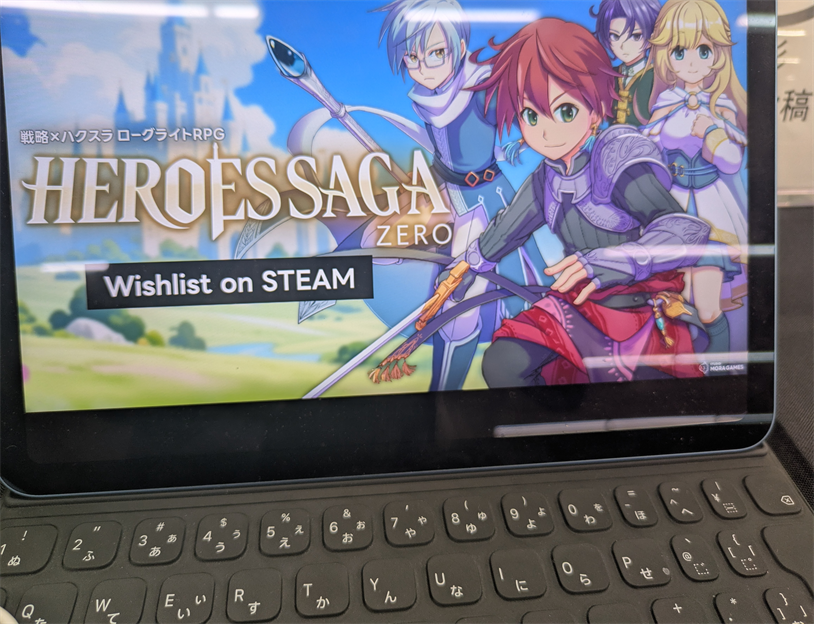
You position your units, watch them auto-battle, and grow stronger before heading into the next fight.
Progression leans heavily into hack-and-slash randomness, so your luck directly affects how things unfold—which makes even short sessions feel dense and exciting.
I built my frontline warrior as a glass cannon, which… did not go well.
The front line collapsed against the boss, and I thought it was over—but my centrally placed healer somehow kept self-healing and tanking long enough for the backline to finish the job.
That was a close one…
Yumetsukai No Asa to Yoru (Dream Weaver: Morning and Night)
Next was “Yumetsukai No Asa to Yoru” by Juga.
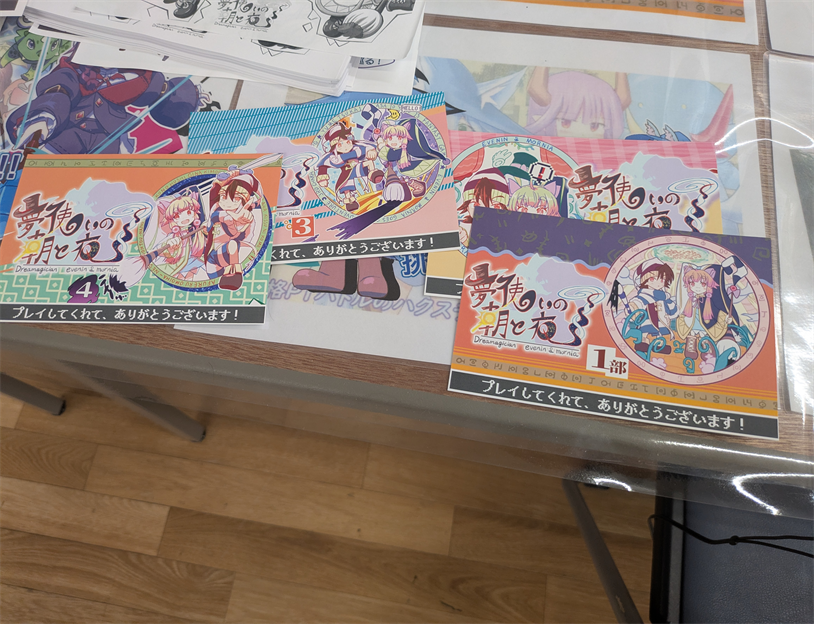
A comedic simulation game with a very nostalgic, early-2000s-style humor that hit me perfectly.
Seeing old-school gag expressions like “bonk on the head” honestly made me weirdly emotional.
Gameplay-wise, it’s a fairly classic simulation game, but with a “Keep” system.
Characters with higher Keep values can push others aside to take position, adding strategic depth in both formation and retreat.
Talking with the developer, I learned they’re a huge fan of the Summon Night series—and that influence really shows.
Slot & Dungeons
Then I played “Slot & Dungeons” by SparkWingGames.
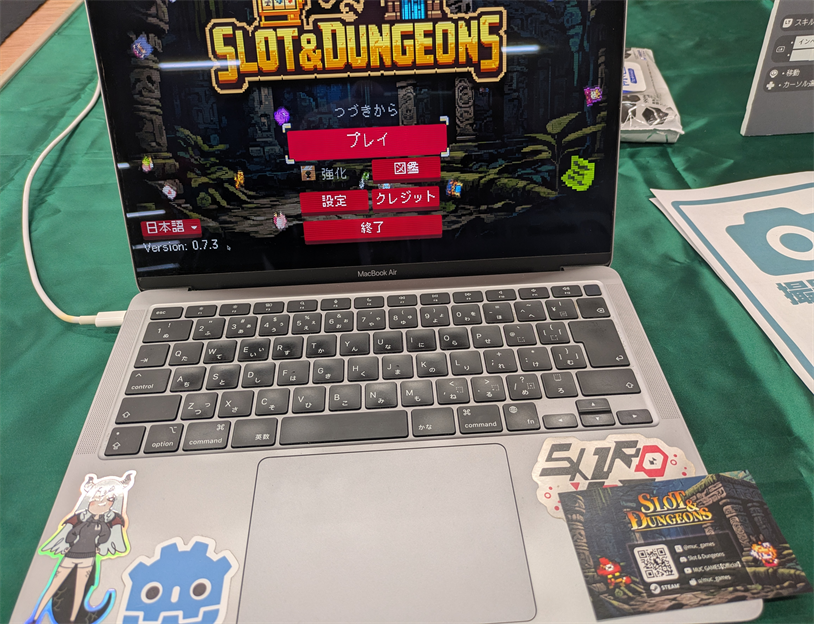
A deckbuilding roguelike where you spin slots to generate dungeons, then conquer them.
Building your character through selections and rewards is super satisfying.
I went with a mage build—chain-casting AoE attacks right after generating the dungeon, wiping out as many enemies as possible before finishing the rest in close combat.
The chibi pixel characters bouncing around the screen as skills chain together made it visually fun too.
Also, the PC had a sticker of indie game VTuber Roema…
(Sorry the reflection hid her face… seriously…)
Platonica Space
Next was “Platonica Space” by Kazuhide Oka.
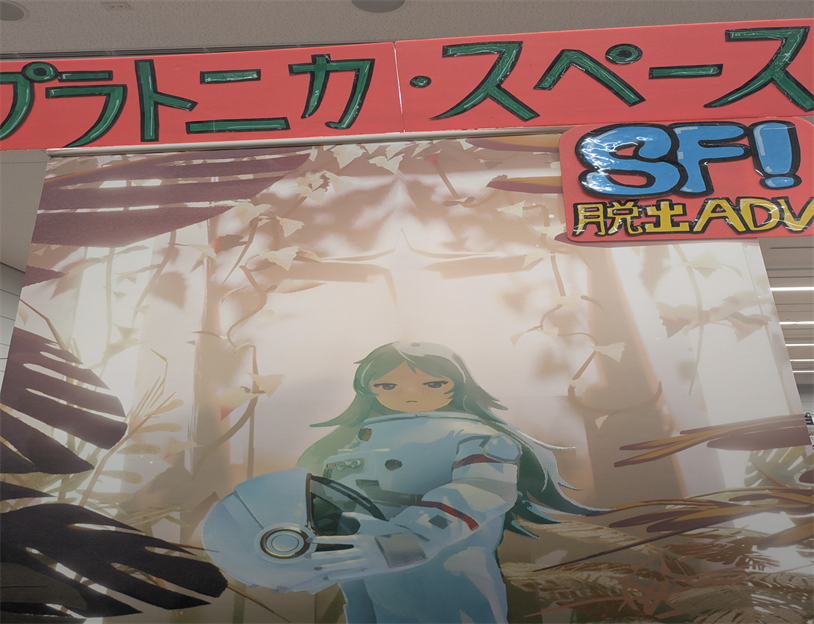
An escape adventure where you collect memory-infused objects and piece together the past to uncover the truth.
The pacing is slow and comfortable—the BGM, character tone, and overall rhythm all feel intentionally relaxed.
Personally, I appreciated the camera movement—it felt slightly delayed and gentle, which meant almost zero motion sickness.
There’s also this faint sense of unease beneath the calm.
Like… “Do I really have to leave this place?”
You’re led to believe you’re inside a spaceship—especially with hints like “that planet is no longer habitable”… but is it really?
Raroteroru Panic
Next up: “Raroteroru Panic” by Hoshizora Seika.
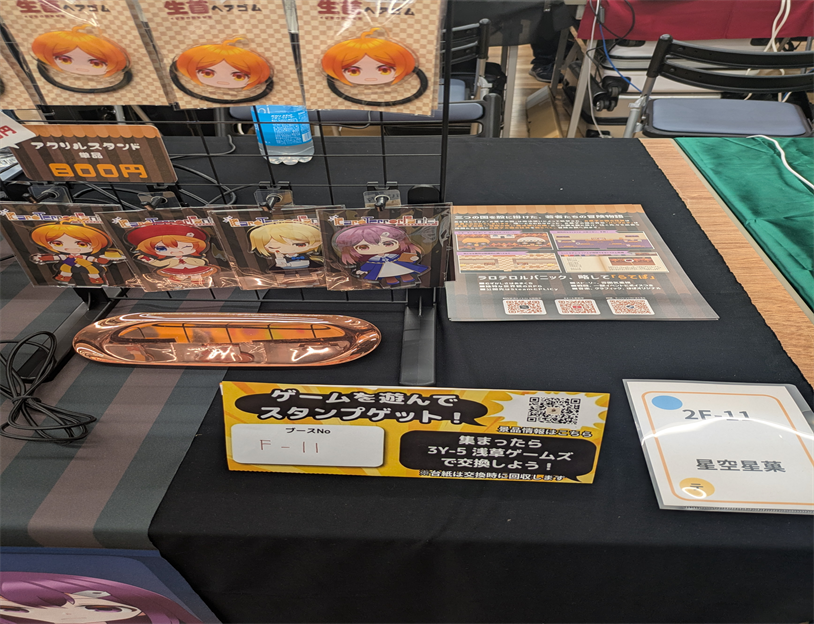
An RPG set in a Halloween-themed candy world, with intentionally easy difficulty.
Fully voiced, beautifully decorated UI—just an overwhelming amount of cute.
Characters have food preferences, and you choose healing items based on that, which adds a fun twist.
Also—it’s made in RPG Maker MZ.
As someone currently using the same tool, I had a moment of:
“Wait… you can do THIS with MZ?”
Garden Hunt
Then I tried “Garden Hunt” by Kamiena.
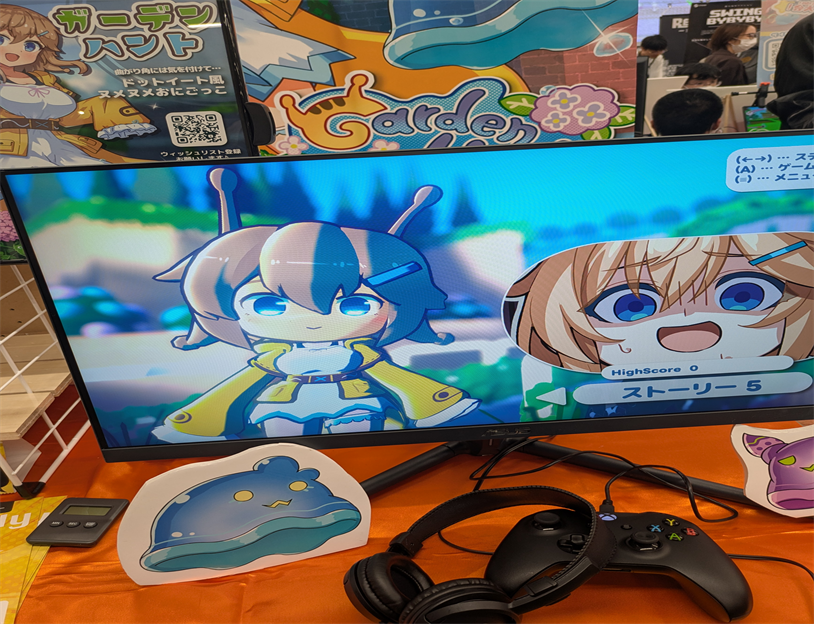
A slime-themed tag-action game where you rescue people.
Gameplay is simple: dodge enemies while turning left and right to collect pure slime.
But there’s a surprising amount of depth:
- How do you lure enemies to secure a path?
- Can you manage your resources before they run out?
- Can you read the situation from sound and slime trails?
It’s more puzzle-heavy than it looks—and really engaging.
The developer mentioned it originally allowed free movement, but was too difficult—so they refined it into a directional action puzzle.
Also… the protagonist Meina’s “troubled face” in that screenshot?
Way too cute.
Let’s move on before I start making weird noises.
Oni no Moribito (Guardian of the Oni)
Next was “Oni no Moribito” by Hisa Azumi.

A Japanese-style 3D action game where you control an oni princess.
The movement is incredibly smooth and responsive—just feels good to play.
The tutorial is intuitive, and combined with the music, it pulls you into the world quickly.
Also, every character is adorable.
I’ve said “cute” way too much in this report…
Aural and the Dragon of Light: Gathering Light
Next up: “Aural and the Dragon of Light: Gathering Light” by Mimui / Mimisuke.
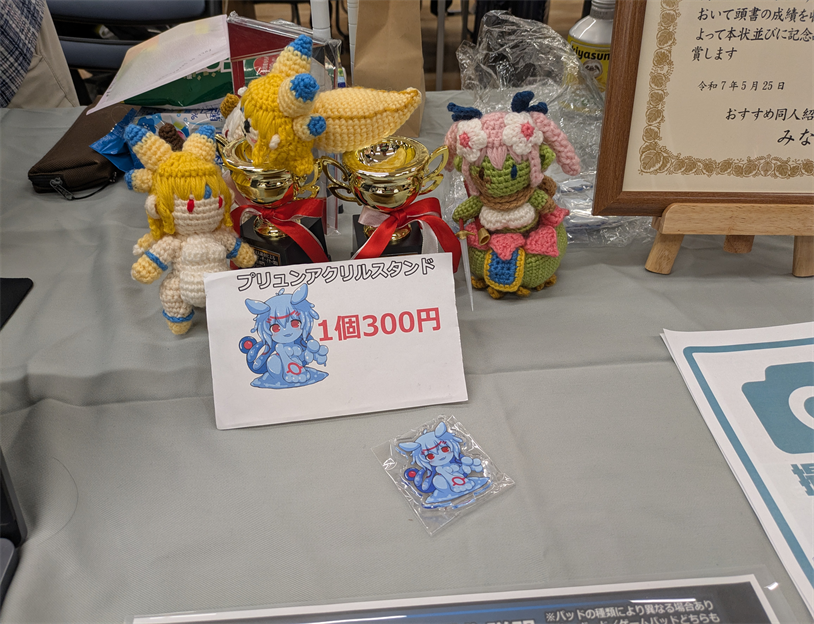
The sheer density of monster girls. Incredible.
A side-view RPG where characters move constantly.
Every skill has its own animation, and they’re all high quality—with great timing and flair.
Even the tutorial, delivered by the characters, is packed with charm.
Cute. Cute. Cute.
Okay, I’ll stop saying that for a while.
Apparently the story is a straight-up classic RPG.
Now I’m curious.
Also—this is made in RPG Maker MZ too.
…My MZ is different from theirs.
Deci Twelve
Finally, I played “Deci Twelve” by Engawa//.
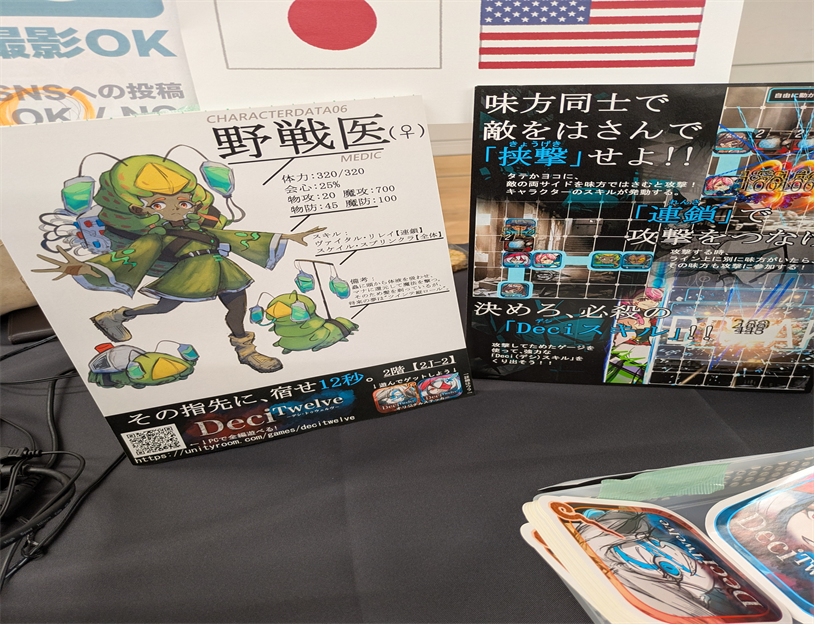
You place characters on a grid to sandwich enemies and deal damage.
Positioning is everything—you can increase damage or reposition units by pushing enemies around.
It’s simple, but highly tactical—and I got completely absorbed.
Character-specific skills also add depth, from AoE attacks to buffs and duration extensions.
Closing Thoughts
Even while being completely intimidated by handing out business cards, I still managed to enjoy the event as a gamer.
There were also developers I only got to greet without playing their games…
As always, thank you for everything!!
If you enjoyed this report, I also wrote one for Tokyo Game Dungeon 10—feel free to check that out.
Enjoy your gaming life!!
And thanks for reading all the way to the end!
I’m currently running a project called IndieGame100, where I clear indie games one after another and write deep-dive reviews—check it out if you’re interested!
For Game Developers
I’m currently running an experimental series called “Pre-Release Spotlight”, where I focus on analyzing why a game is interesting based on actual hands-on experience with demos and early access versions.
Alongside that, I also conduct interview articles titled “Visiting Your Origins.”
The goal is to create a precedent where people feel comfortable talking about your game—planting the seeds of a fan community.
If you’re interested, feel free to reach out via the contact form below.