This post is also available in:
Ever wonder what’s going on inside the head of someone making a game? I do.
So in our interview series, “A Glimpse of the Roots, Dropping In,” we barge right in and dig into game creators’ inner drive and thought process.
- For anyone who thinks, “Catching a glimpse of the creator’s personality is part of what makes indie games great,”
- and for anyone unsure what to focus on when making things,
I hope this turned into a nicely interesting read.
This time, as the interview portion of our pre-release spotlight series “Pre-Release Spotlight,” I spoke with Med.y.m.
Much appreciated!
I also wrote an intro article for their game, “Verdant Requiem,” as the game overview portion.
Please check that out as well.
For this interview as well, I leaned heavily on Katsushika Rokusai’s roundtable article with SRPG Studio’s developer as a reference.
We’d like to express our gratitude once again.
Alright then—let’s get into it.
Introducing Med.y.m
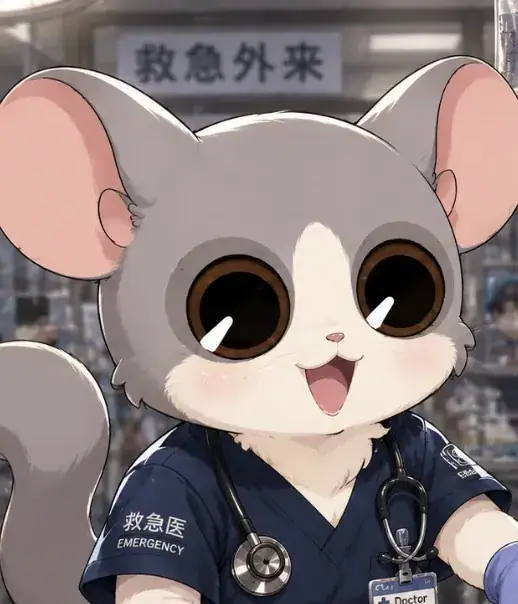
Today’s guest: Med.y.m
Developing “Verdant Requiem” Steam:Verdant Requiem
—First, please introduce yourself!
My name is Med.y.m. I work as an emergency physician somewhere in Japan.
I make games as a hobby. Lately I’ve been making an SRPG.
—A quick warm-up question! Any manga you read between work sessions?
I’ve been reading less manga lately, but I used to read things like Dragon Ball, Dr. Slump, Dragon Quest: The Adventure of Dai, Slam Dunk, and JoJo’s Bizarre Adventure.
—In a single sentence, what kind of game is Verdant Requiem, which you’re currently developing?
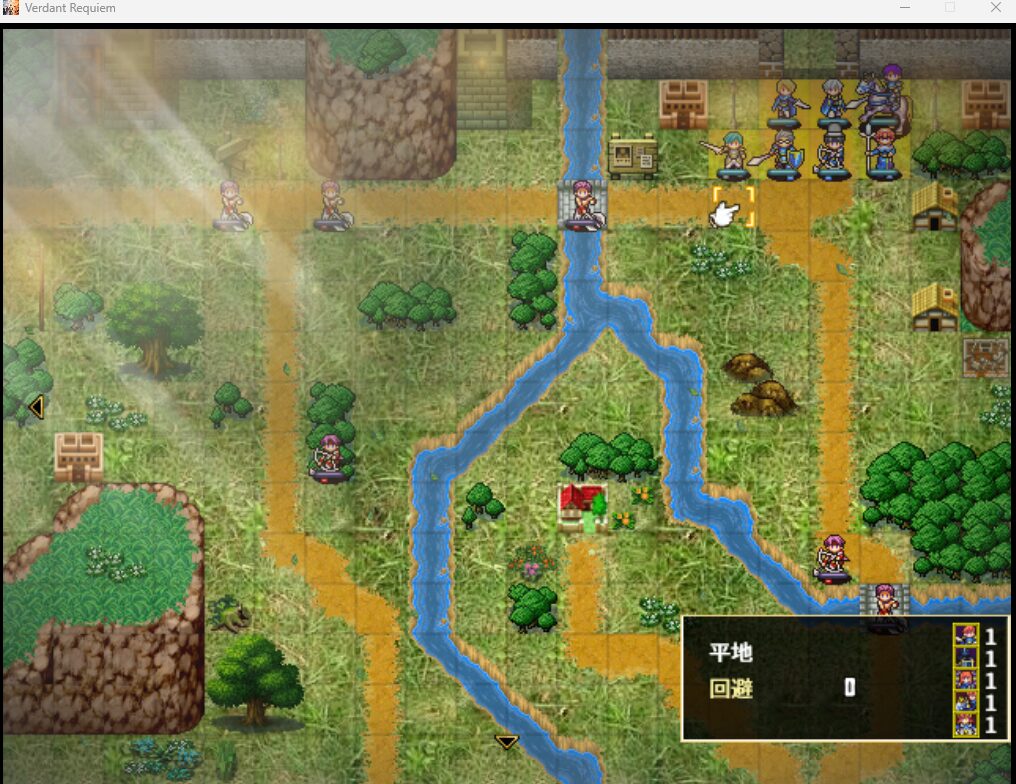
The concept is an “SRPG in search of balance.” I’m aiming for a Fire Emblem–like SRPG with clean, 2D-style maps.
A focus on graphics
—I’ve heard you spend your spare time making and animating pixel art. Are the unit sprites and map tiles in Verdant Requiem also made by you?
Most of the unit sprites are just edits of existing assets.
Many of the map tiles are also edited and adjusted, but some are fully original, and some are AI-generated and then manually tweaked to give them a pixel-art feel.
P.S.
Amazingly, right after this interview, he modified the map tiles, used AI to generate terrain maps such as grasslands, and then fine-tuned them himself.
That was fast!!
Ease of use and visual beauty
—Beyond the visuals themselves, it feels like you’re also putting a lot of effort into optimization and creating a custom UI to make those visuals possible.
To make it not only “nice to look at,” but also “easy to use and smooth to play,” what kinds of things are you doing?
As for the visual presentation, it’s both a core part of the game’s direction and something that came out of necessity: the swipe feature I was using was too heavy, and I couldn’t optimize it with my skills. I also wanted to add something original, and that’s how it was born.
Once I implemented it, the game ran much lighter, which was a big help.
I also figured that even if something is elaborate, players will drift away if it feels “hard to control,” so
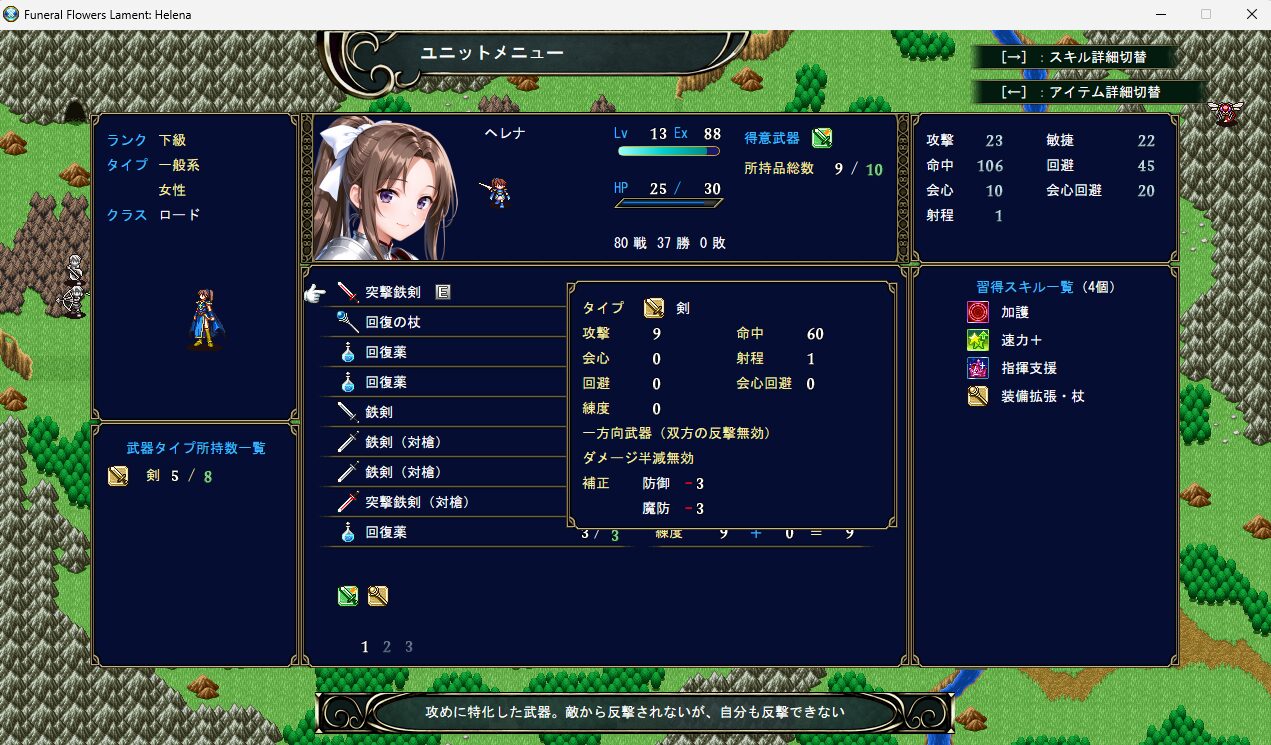
• I keep SRPG Studio’s basic behavior and visual guidance largely intact, but make the UI images themselves original
• I also include fully original systems from the ground up (logistics management, dispatch missions, etc.)
and I try not to lean too far toward the latter.
Enemy action prediction lines, predicted movement arrows for your army, and various map camera effects were a trade-off between presentation and heavier processing, so I’ve been working to optimize them down to a practical level—and I’m still continuing that optimization now.
What you prioritize in presentation—and what you cut
—Looking at your Ci-en,
I mean, I thought the radar chart display looked cool… I even tried making and adding a plugin to show growth rates as numbers, but it didn’t feel right so I dropped it and switched to an alphabet-style growth tendency display.
as you put it.
Reading your other posts too, I got the impression that while you care about presentation, there’s something you prioritize more than flashy visuals.
For you, what do you prioritize when it comes to “game presentation,” and conversely, what do you intentionally cut?
In the past I didn’t think too deeply about it—I just wanted to “make something elaborate” and “put a message into it.” But when I started considering making it paid, I suddenly thought I wanted the UI and worldbuilding to be unified in a way that reflects the game’s core.
So,
• For a medieval war-chronicle fantasy feel: black + gold or yellow
• For meta-perspective elements: the cinematics plugin
That’s the kind of differentiation I tried to keep in mind (to a certain extent) when building the UI.
In particular, the latter is something I built with a certain “structure” in mind—and emphasized.
I think that if you clear the game through the truth route, you’ll understand to some extent the meaning behind the title and the core meaning of the work…
One thing I cut in this game was realistic motion.
I could have gone further, but I thought back to the GBA Fire Emblem games and kept it simple. (On the other hand, I want to go more elaborate in my next project.)
Also, I chose not to disclose all the data. I think growth tendencies are the main example. Another example would be not knowing in advance which growth rates will increase from cooking.
If you say, “But with a meta perspective you should be able to see that,” then fair enough—but I think the fun of “testing what’s unclear” matters too.
This is an old memory, but apparently when my older brother was a kid, there was a rumor going around in FF5 that “if you talk to the Moai on the seafloor, you can enter a secret cave and get a hidden weapon”.
I still remember lying in front of the TV as a kid and testing it together with my brother, and from that perspective—of “episodes that only happen because not everything is revealed”—I went with “growth tendencies” rather than “growth rates.”
I’m aiming for moments like, “This guy says Growth Rate B, but isn’t he closer to A?” or “Even within B, he feels more like he leans toward C…”
The last thing I cut was map visuals that are too realistic.
Honestly, modern apps already look gorgeous, and I think there’s a limit to how far you can push 3D-ness and realism.
So I want to push how beautiful you can make it look in 2D, and as part of that I added pseudo camera effects, lighting, fog, weather, pseudo water reflections, and more.
A childhood love of LEGO
—I’ve heard you really loved LEGO as a kid, and that you loved making all kinds of things just as much as games.
Is there anything you built back then that you’d like to brag about?
I don’t have photos and it’s a distant memory, but
• FF6: Edgar and Figaro Castle, the Blackjack airship
• The Adventure of Dai: Hyunckel in his armored form
Those are the ones I remember making.
“Balance” in system design
—In your Ci-en article “The idea of ‘balance’ in system design”, you say you design things so there isn’t a single optimal solution like “Do this and you win,” and so players can make decisions based on the situation.
Was there an experience that made you feel, “Because it’s an SRPG, I don’t want it to become a game of chasing the optimal solution”?
To be honest, I’m not sure I’ve actually succeeded in preventing it from becoming an optimal-solution game—but in a previous work, I once got a review along the lines of “Honestly, I only ever pick this skill,” and that was the trigger.
So I tried to deliberately offer a wide range of options, while thinking, “For achieving the objective, the optimal solution is basically A, but as a surprise tactic you can also clear with B or C—and depending on the situation, that might be more efficient”…
For a world that feels alive
—Reading the character banter and the conversations that explain the situation, it doesn’t feel overly expository… more like there’s a kind of “rawness of real human conversation.” When depicting these character interactions, what did you keep in mind?
How to present information is really difficult, and it’s a weak point for me. I was so bad at Japanese as a kid that I’d cry just from writing a single line in a kanji practice notebook, so I feel insecure about writing a scenario with no rough edges, properly planting foreshadowing and paying it off.
Still, I try to make the information come from “the conversations of people living in that moment,” so that I can reduce the sense of exposition even a little…
There are limits, but I also tried various things (in my own way, despite being bad at Japanese), like “How would people in this world express this idiom?”.
Three unforgettable games—and why
—Tell us three unforgettable games, and why they’re unforgettable!!
For games overall,
• FF6
It really stuck with me because my save data got deleted right before the end, and I was so shocked I cried. Apparently my older brothers took turns playing and got it back to almost the same point, but I don’t remember that part (lol).
• Shin Megami Tensei
It shocked me that depending on your route and alignment, you might have to fight former allies, and that some demons can’t be recruited as allies if your alignment changes.
• The Legend of Heroes: Trails series
I was impressed by the ensemble storytelling, how it showcases characters, and how it builds its world. It may have influenced my own work.
Those don’t include any SRPGs, but for SRPGs,
• Fire Emblem series
Structurally, I like Fates. Like Shin Megami Tensei, I liked the way branching paths lead to fighting former comrades. For story, I like Genealogy of the Holy War and Mystery of the Emblem.
• Tactics Ogre
Starting from Balmamusa, I loved the depiction of so many scenes and the conspiracies.
• FFTA
It was the first SRPG I ever bought.
…Those are my three.
Searching for “balance”
—In your unforgettable games and in this game’s design philosophy,
- a system and world where it’s not “Do this and everything is solved” (which I think is exactly what your catchphrase “an SRPG in search of balance” is getting at),
- the balance between presentation and production cost,
- difficulty settings,
and so on—references to “balance” keep coming up.
Could you tell us why “balance” is so important to you, Med.y.m?
Do you break the balance, or do you maintain it?
That ties directly into the performance of your units, and it connects to the core of this game.
As for difficulty balance, at first I just thought, “I want as many people as possible to play it,” but lately I’ve started to think it might actually connect to the core of the work more than I expected…
The search continues
—From the UI trial-and-error, to the story about you and your brother testing rumors, and even the theme of the game, it feels like there’s a strong commitment to “searching” throughout your creative work as a whole.
So maybe as a kid with LEGO, you also enjoyed “searching for ways to build something”?
I think I don’t dislike trial and error (when it’s something I’m interested in).
Even in my day job, I spend every day thinking, “Isn’t there a better way?”
As for LEGO, I’m not sure I was thinking that deeply—but I think I was just really frustrated about losing my FF6 save data (lol).
How much should you cater to “Emblemers”?
—On Ci-en,
“How much to cater to the Fire Emblem fanbase has been an eternal challenge from the very start of development.”
you wrote—and it seemed like you were very aware of the gap between existing Fire Emblem fans and SRPG newcomers when setting the difficulty.
When you first started making Verdant Requiem, did you begin it as a project aimed more at existing fans, or more at beginners?
I wanted to aim right in the middle between existing fans and beginners.
Once, while watching a Fire Emblem Awakening playthrough, I thought, “So this is how advanced players play… I can’t copy that…” and I felt like there’s probably a pretty big gap between beginners and advanced players in the SRPG scene.
I’m not an advanced player at all, but I’m not a complete beginner either, so assuming I’m somewhere in the middle,
• If I play and units “sometimes or fairly often die unexpectedly” → Normal
• If it feels easy → Easy
• If it’s honestly tough unless I keep save-scumming → Hard
I figured that would cover a decent range of players…
A message for readers
—Lastly, please leave a message for our readers!!
Right now I’m in the final tuning phase for the full release, and also considering where to publish it.
In the full version, route branching will lead to new developments and tragedies, and the truth of the continent will be revealed.
Please wait a little longer for the full release!
And if you’re a resident or a medical student, please consider emergency medicine!!
In closing
So, what did you think?
Med.y.m’s curiosity was truly incredible, and with the mindset of “It’d be rude not to match that energy,” I fired off questions one after another.
So, huge thanks to Med.y.m for answering the interview, and to Katsushika Rokusai for introducing me to Med.y.m!!
I also feature Med.y.m’s pre-release project “Verdant Requiem,” so if you’re interested, be sure to check it out.
And in “Visiting Your Origins,” I’ll continue interviewing indie game creators going forward.
(If you’re an indie game developer and you’re thinking, “I might be interested,” I’d be glad if you reached out via the contact form.)
In the previous “Visiting Your Origins,” I spoke with Michihito Kuroki, whose deep love for war chronicles and Fire Emblem really shines through. I’d be happy if you gave that one a read too.
With that, have a great gamer life!
Thanks so much for reading to the end!!
*For game developers*
In “Pre-Release Talk,” we create pre-release feature articles and the interview series “A Glimpse of the Roots, Dropping In,” with an emphasis on going beyond “it’s fun” and digging into why it’s fun, based on real hands-on play with demo and early access builds.
By doing so, we aim to create a precedent that says, “It’s okay to talk about this game,” and to sow the seeds of a fan community.
About the project “Pre-Release Spotlight”
If you’re interested, feel free to contact us using the form below.