This post is also available in:
It’s time for the fifth installment of Pre-Release Spotlight!
In this series, I shine a light on games that are still in development, using my own play experience as a starting point to explore the intentions behind their design—and the creative roots from which they grew.
For our fifth installment, we’re featuring MemoryPixel’s hack-and-slash dungeon-crawling RPG, Dungeon Fantasia.
Our Guest This Time
MemoryPixel

This project aims to create a place where people can casually talk about games before they are released.
So whenever you find a game that catches your interest, let’s talk about it as much as humanly possible.
And with that said, let’s get into it!!
An Overview of Dungeon Fantasia
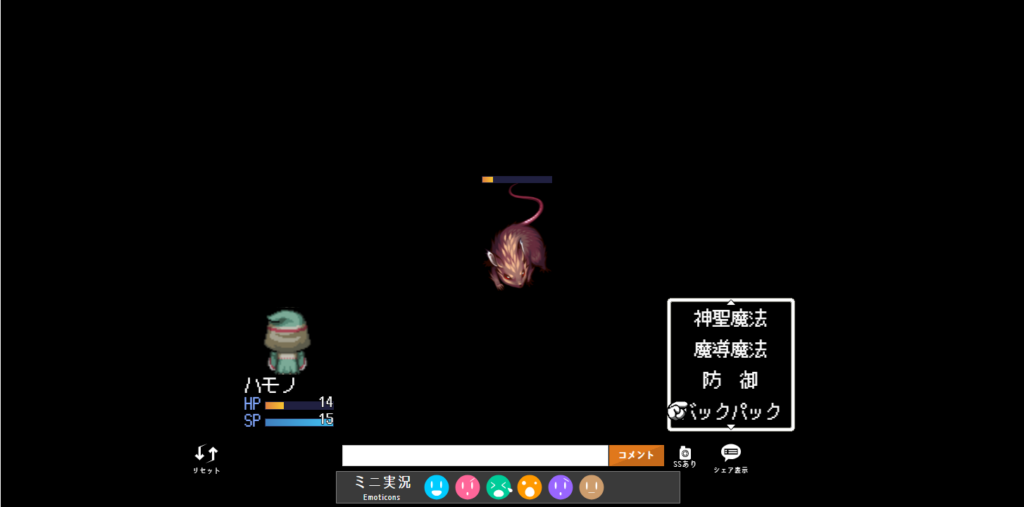
Genre: Hack-and-Slash Dungeon-Crawling RPG
Developer: MemoryPixel
Play the alpha version for free in your browser:
Play the Alpha Version of the Hack-and-Slash Dungeon-Crawling RPG Dungeon Fantasia! – Free Games on PLiCy
(Link)
While thoroughly embracing the style and presentation of classic retro RPGs, this game focuses specifically on two things: hack-and-slash loot hunting, and a life simulator in which you live as an ordinary adventurer.
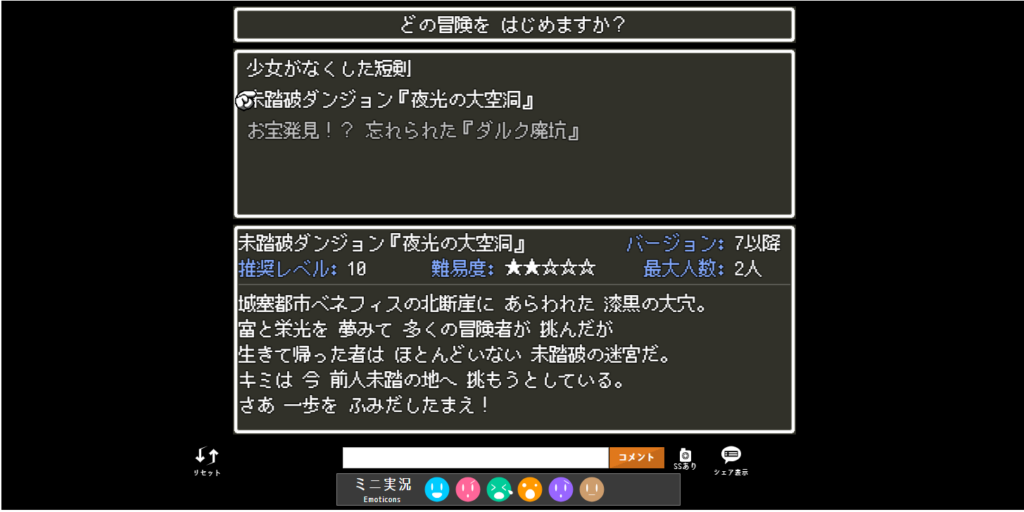
Its UI and quest descriptions make generous use of classical RPG-style language, while the actual gameplay has been polished to suit modern sensibilities.
When somebody tells you, “Go forth and complete this task!!” how could you possibly not get hyped?
Seriously.
Hack-and-Slash Gameplay That Gets the Dopamine Flowing
Of all the elements that define this game, one of the strongest is its hack-and-slash gameplay.
You defeat dangerous enemies, collect equipment with modifiers such as +1 and +2, and gradually strengthen your character.
After repeating that steady process of improvement, a rare unique item will eventually drop out of nowhere—and then it’s time to start mowing down your enemies.
Visually, it may look like a peaceful 2D retro RPG with a calm and gentle atmosphere.
But the actual experience is pure, adrenaline-pumping hack-and-slash.
As MemoryPixel explained in our interview (link), the game addresses the classic hack-and-slash problem of:
“Why won’t the desire sensor give me the item I want?!”
To prevent players from being completely at the mercy of random drops, completing parts of the main scenario will guarantee certain unique items as rewards.
For more about the intention behind this design decision, be sure to check out the interview.
A Life Simulator That Lets You Experience the Life of an Adventurer
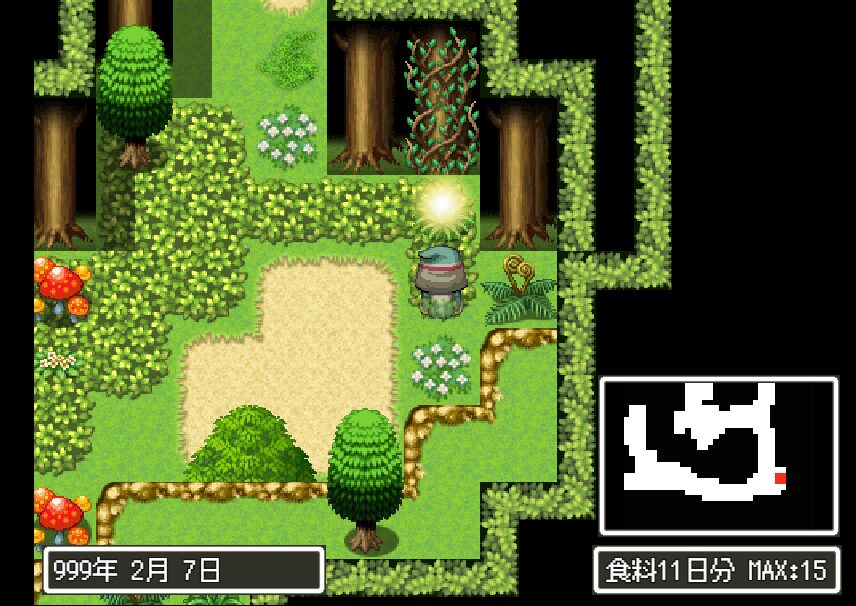
MemoryPixel told me that this game was heavily influenced by Lunatic Dawn.
That inspiration led to a system where you can accept requests from the townspeople, make deliveries, manage your food supplies, and experience the everyday life of an ordinary adventurer.
This system even extends to the enemy tables inside the dungeons.
As you defeat enemies, the ecosystem changes, altering the types of creatures you encounter.
These changes also follow certain patterns. For example, a dungeon initially dominated by goblins may eventually become populated mainly by insects.
This system reminded me somewhat of the ecosystem mechanics in the Romancing SaGa series.
A Simple Structure That Supports a Wide Range of Playstyles
Although the game has constructed its own distinctive systems for both hack-and-slash progression and life simulation, its fundamental gameplay loop is extremely simple:
Register an adventurer
→ Choose a main scenario
→ Enter a dungeon
→ Fight enemies and strengthen your character
→ Return to the dungeon
→ Complete the main scenario
→ And so on…
It is all put together in an exceptionally straightforward way.
Combined with the immersive qualities of the life-simulation elements, this simplicity creates a sandbox capable of accommodating a wide variety of playstyles.
Let me give you an example.
I wanted to secure as much combat strength as possible, so I decided to hire a mage as a companion.
I think it cost around 5,000G.
At that point in the game, a single piece of equipment cost roughly 2,000–3,000G, so hiring them was a considerable investment.
Unfortunately, being the careless fool that I am, I somehow managed to get that mage knocked out in battle.
Reviving them would cost almost another 5,000G.
However, I had already spent nearly all my available funds on the hiring fee.
The enemies were also becoming stronger, and fighting alone no longer felt particularly reassuring.
In fact, the entire reason I hired the mage in the first place was because fighting alone had become exhausting.
Continuing to fight alone from that point onward would have been a highly questionable strategic decision.
And so I made up my mind.
All right.
Time to get a part-time job.
I repeatedly checked the guild’s available requests and accepted one minor job after another.
I delivered love letters.
I delivered bouquets of flowers.
I gathered medicinal herbs and turned them in.
Like somebody endlessly picking up shifts through a gig-work app, I made full use of every spare moment available to me.
After spending roughly an entire in-game week working part-time jobs unprotected by even the faintest hint of labor law, I had nearly forgotten how to swing a sword like an adventurer.
But at long last, I managed to scrape together the revival fee and get my mage back onto the battlefield.
For Those Who Want Messy, Exhilarating Days of Adventure
Within its extremely simple structure, this game tightly packs together all the essential flavors of an adventurer’s life.
For anyone who feels an uncontrollable hunger for youthful days spent living side by side with danger, this is a game worth checking out.
And that concludes my introduction to Dungeon Fantasia!
I also had the opportunity to interview its developer, MemoryPixel (link), so be sure to check that out as well if the game has caught your interest.
Enjoy your gaming life!!
Thank you so much for reading to the end!!
→Previous Pre Release Spotlight “Funeral Flowers Lament Helena”
→Next Pre Release Spotlight “Redemptions Ocean”
On X, I shout about new article updates, my impressions of the games I’m currently playing, and my attempts at making games of my own.
It is approximately 1.3 times louder than the blog itself.
According to our own internal calculations.